Discover the latest updates, guides, and insights from the open-source voice assistant ecosystem. Join our journey of innovation and collaboration.
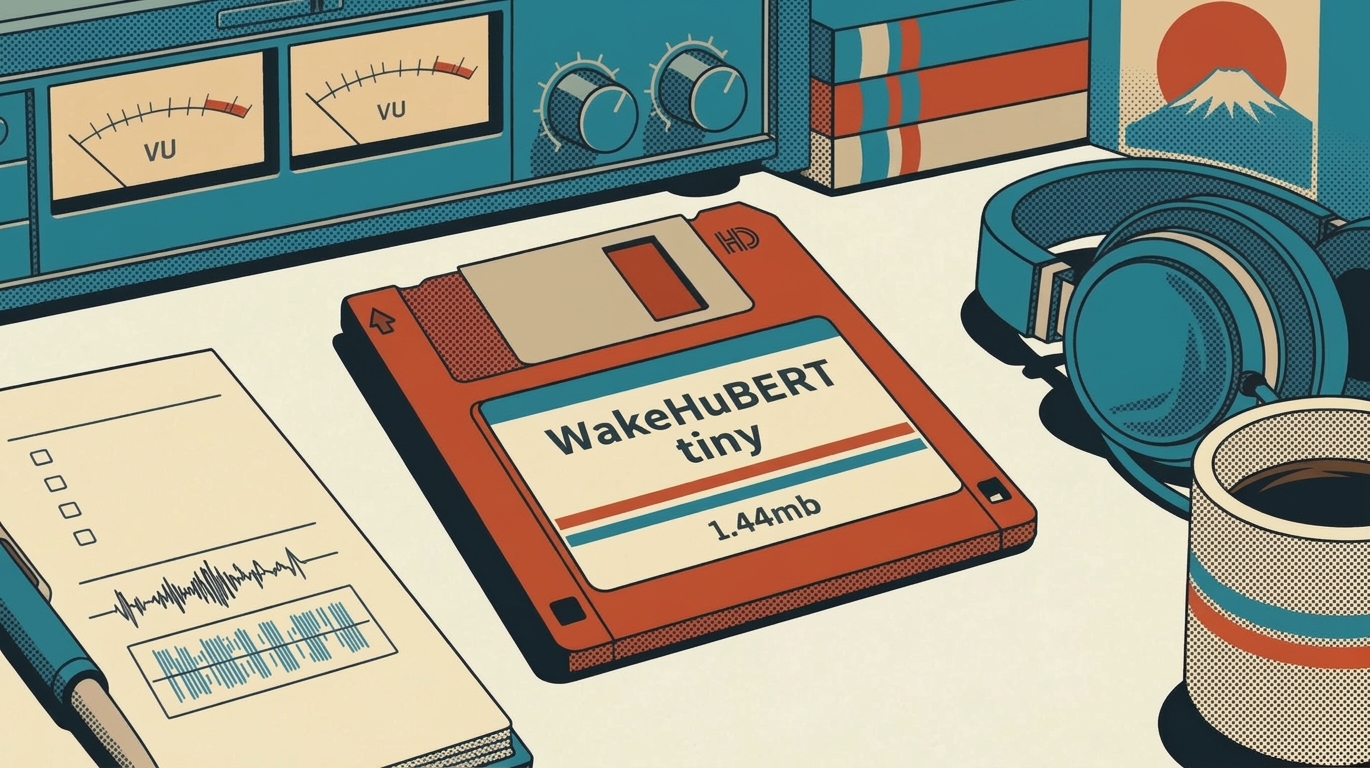
HuBERT-base has about 95 million parameters. WakeHuBERT tiny, its streaming student, has about 0.64 million, and its int8 file gzips to 1.22 MB. Here is how we distilled it, and the new OVOS wake word plugin whose models run on it.

A new wake word verifier plugin teaches OpenVoiceOS to recognise *who* is speaking, not just *what* was said. Enrolled household voices get through the wake gate; the TV advert and the guest who thinks he's funny don't.
A full translation platform for OpenVoiceOS skills: context-aware editor, automated PR pipeline, a validation engine tuned to voice-assistant file types, and open ML datasets, running entirely on GitHub, with zero infrastructure of our own to operate. Just a GitHub account, and forkable by anyone.
How a 2018 Mycroft fairytale skill, two false starts, and one offhand comment from Jarbas turned into an 8-provider common-reading pipeline for OVOS.
We rewrote several C, C++ and Java programs (espeak-ng's G2P, Cotovia, AhoTTS, HermiT) as pure Python, with an AI reading the original source and a human orchestrating. No human on our side read the originals. That raises two separate questions: can the output be owned at all, and is it a derivative of the input? We kept the upstream licences because that was cheaper than answering. We still think the question is open.
Why I built a TUI client for testing OVOS without a mic or speaker - and a few real bugs it caught along the way that no amount of log-tailing would have surfaced on its own.
OVOS STT, TTS, and translation servers now describe themselves over UTCP and mount an MCP endpoint. Any agent that speaks either protocol can discover and call them — no custom client, no wrapper code.
Share your knowledge with the OpenVoiceOS community! We welcome contributions on topics related to OpenVoiceOS, voice assistants, open-source technology, and more.
Learn How to Contribute